
Hiring the right talent is one of the most critical factors in building a successful organization. Yet, many companies struggle with inconsistent hiring decisions, high attrition rates, and mismatched candidates.
The solution? A structured candidate screening process.
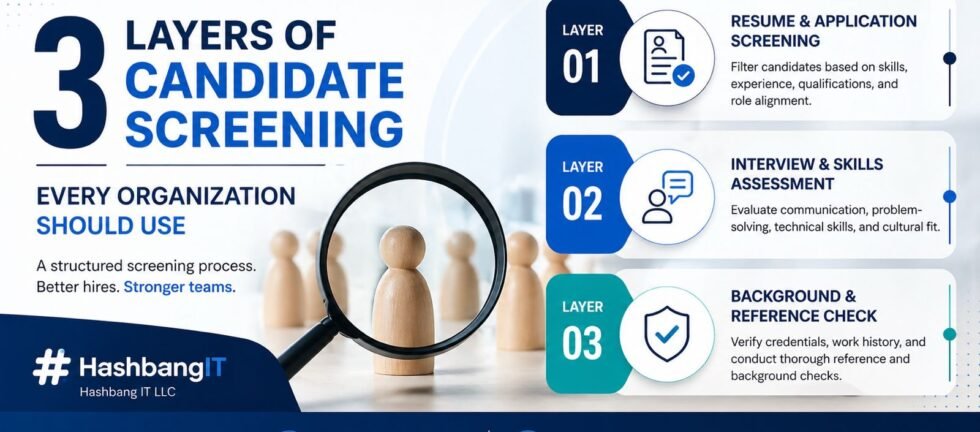
At HashbangIT (Hashbang IT LLC), we help organizations streamline hiring with proven screening strategies. In this blog, we break down the three essential layers of candidate screening every business should implement to hire smarter and faster.
Why Candidate Screening Matters
Before diving into the layers, it’s important to understand why screening is crucial:
– Reduces hiring risks
– Improves quality of hires
– Saves time and recruitment costs
– Enhances employee retention
– Ensures cultural and role alignment
Without proper screening, organizations often rely on guesswork—which leads to costly hiring mistakes.
Layer 1: Resume & Application Screening
The first layer is your initial filter—this is where you separate potential candidates from the rest.
What to Look For:
– Relevant skills and technical expertise
– Work experience aligned with the job role
– Educational background and certifications
– Employment gaps or inconsistencies
– Keywords matching the job description
Best Practices:
– Use Applicant Tracking Systems (ATS) to automate filtering
– Create a clear checklist based on job requirements
– Avoid bias—focus on skills and experience
Why It Matters:
This stage helps you quickly identify candidates who meet the basic qualifications, saving time in later stages.
Layer 2: Interview & Skills Assessment
Once candidates pass the initial screening, the next step is to evaluate their real-world capabilities.
Key Areas to Assess:
– Technical skills and domain expertise
– Problem-solving ability
– Communication and interpersonal skills
– Cultural fit within the organization
Types of Assessments:
– Technical tests (coding, tools, case studies)
– Behavioral interviews
– Situational judgment tests
– Panel or client interviews
Pro Tips:
– Use structured interviews for consistency
– Ask scenario-based questions
– Include practical assignments when possible
Why It Matters:
Resumes don’t always reflect actual ability. This layer ensures the candidate can perform the job effectively.
Layer 3: Background & Reference Check
The final layer ensures credibility and trust before making an offer.
What to Verify:
– Employment history
– Educational qualifications
– Professional references
– Criminal background (if required)
– Work authorization and compliance
Best Practices:
– Always get candidate consent
– Use reliable verification services
– Speak directly with previous managers when possible
Why It Matters:
This step protects your organization from fraud, misrepresentation, and potential risks.
Common Mistakes to Avoid in Candidate Screening
Many companies unknowingly weaken their hiring process. Avoid these pitfalls:
– Skipping background checks
– Relying only on resumes
– Conducting unstructured interviews
– Ignoring cultural fit
– Rushing the hiring process
A strong screening strategy eliminates these risks.
How HashbangIT Helps You Hire Better
At HashbangIT (Hashbang IT LLC), we specialize in IT staffing and talent acquisition. Our screening process is designed to deliver pre-vetted, high-quality candidates to our clients.
Our Approach:
✔ Multi-layer candidate evaluation
✔ Industry-specific screening techniques
✔ Fast turnaround time
✔ End-to-end recruitment support
We don’t just fill positions—we help you build high-performing teams.
Final Thoughts
A great hire doesn’t happen by chance—it’s the result of a well-structured screening process.
By implementing these three layers of candidate screening:
1.Resume Screening
2. Skills Assessment
3.Background Verification
You can significantly improve hiring outcomes and reduce costly mistakes.